

Good Governance Protects the Mission, GC Leader Says
Hensley Moorooven warns that passive boards and weak oversight can create conditions for organizational failure.
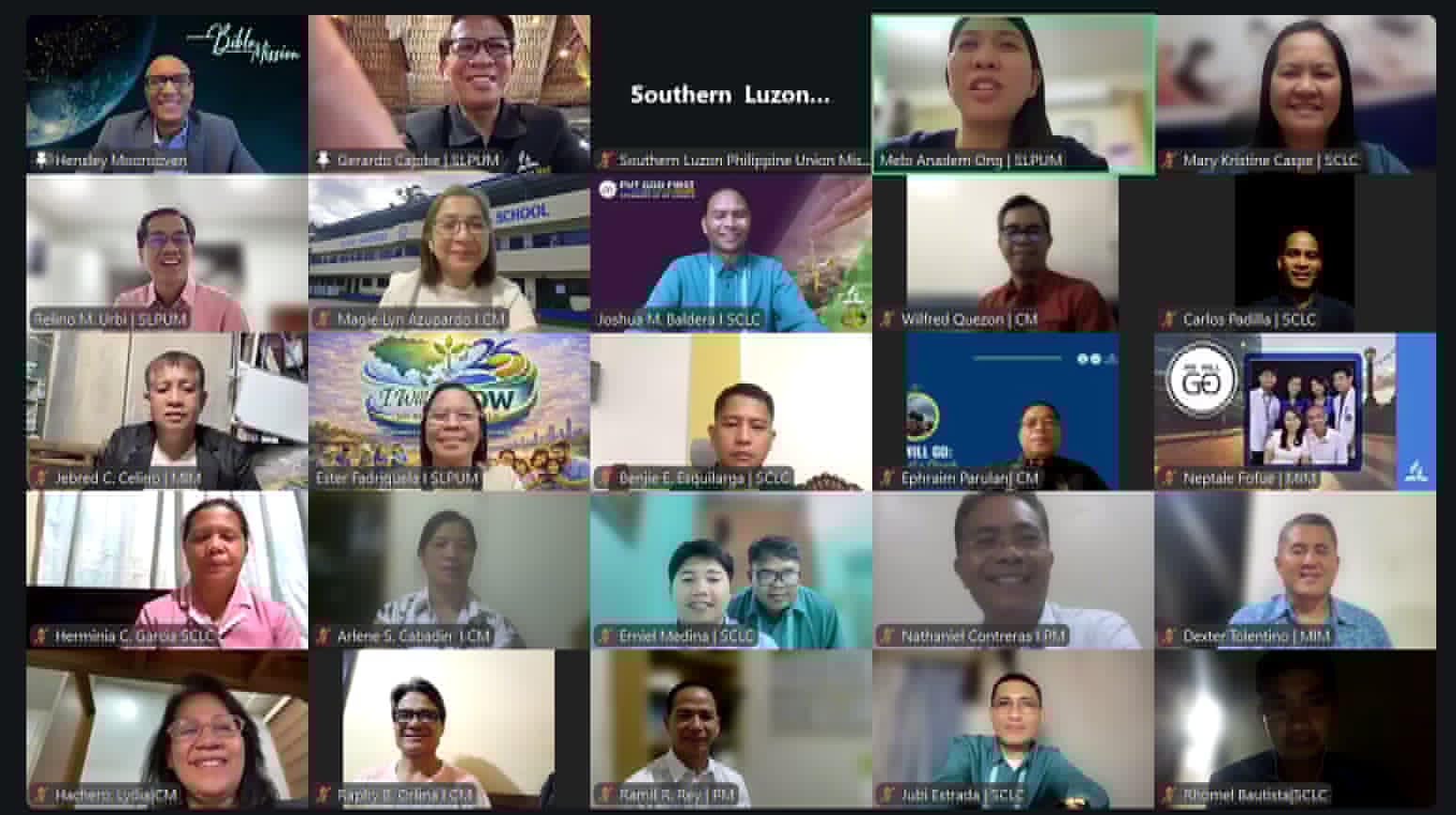
Governance is often viewed as an administrative function, but according to Pastor Hensley Moorooven, undersecretary of the General Conference of Seventh-day Adventists, it is one of the safeguards that protects the Church’s mission, preserves its integrity, and strengthens accountability.
Addressing executive committee members, board members, and institutional leaders across the Southern Luzon Philippine Union Mission (SLPUM), Moorooven warned that passive boards and weak oversight can allow ethical failures to go unchecked and eventually threaten the effectiveness of an organization.
The orientation on governance, committee processes, and fiduciary responsibility brought together approximately 75 leaders from mission fields, educational institutions, healthcare ministries, and the union office as part of SLPUM’s efforts to strengthen leadership and governance at the beginning of a new term.
Speaking via Zoom, Moorooven emphasized that committees are not merely administrative structures but are fundamental to how the Seventh-day Adventist Church functions and makes decisions.
“In the Seventh-day Adventist Church, decisions are made by a group,” he said. “We believe in committees. No decisions are taken by a single individual.”
While committees are often composed of highly capable and qualified individuals, Moorooven noted that effective governance requires more than personal competence.
“We need to train a group. We need to explain how group dynamics work because effective decisions do not arise spontaneously,” he said.
Highlighting the importance of accountability, Moorooven cited leadership researcher Marianne Jennings, who identified weak boards as one of the warning signs of organizational ethical collapse.
“Board members fail to provide genuine oversight and accountability,” he quoted. “When board members are passive, overly loyal to management, or lack independence and competence, they do not question decisions, challenge wrongdoing, or safeguard stakeholder interests. This absence of meaningful governance allows unethical behavior to flourish unchecked, creating conditions in which misconduct can grow into full organizational failure.”
He stressed that committee members have a responsibility not only to participate in discussions but also to exercise independent judgment, ask thoughtful questions, and remain actively engaged in the decision-making process.
“When an individual accepts to be a member of an executive committee, he or she automatically assumes fiduciary duties and obligations,” Moorooven said. “A committee member should not act in his or her own interest, but in the best interest of the organization.”
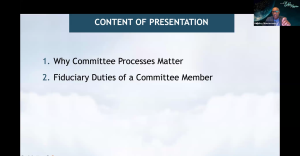
The orientation focused on three key fiduciary duties expected of committee members: the duty of care, the duty of loyalty, and the duty of compliance.
Under the duty of care, Moorooven encouraged leaders to attend meetings regularly, review materials beforehand, and contribute meaningfully to discussions.
“Your voice matters,” he said. “If you are not at the table, you will be on the menu.”
Discussing the duty of loyalty, he emphasized the importance of avoiding conflicts of interest and maintaining confidentiality.
“Loose lips can sink entire organizations,” he cautioned, reminding leaders that information entrusted to committees must be handled with wisdom and discretion.
Moorooven also underscored the duty of compliance, urging committee members to ensure that decisions remain faithful to the mission, beliefs, and policies of the Seventh-day Adventist Church.
“What keeps us together administratively, in terms of governance and structure, is the working policy,” he explained. “If you throw policy away today, tomorrow policy will throw you away.”
Throughout the presentation, Moorooven challenged leaders to view committee service not simply as an administrative assignment but as a sacred trust requiring diligence, integrity, and accountability.
Drawing from Romans 12:8, he reminded participants of the biblical standard for leadership: “He who leads, let him lead with diligence.”
The onboarding session forms part of SLPUM’s continuing efforts to equip leaders for faithful service and effective governance as they work together to advance the mission of the Church throughout Southern Luzon.

Melo Anadem Ong
Related posts
Mission Reach 2026 Mobilizes Members Across Southern Luzon, Yields 915 Baptisms
Mission Reach 2026 Mobilizes Members Across Southern Luzon, Yields 915 Baptisms Churches, care...

“The Front Door Is Digital,” Communicators Told
“The Front Door Is Digital,” Communicators Told As digital platforms increasingly...
Treasurer’s Report Indicates Strong Financial Turnaround
Treasurer’s Report Indicates Strong Financial Turnaround During the Midyear Meetings, Josue F....